
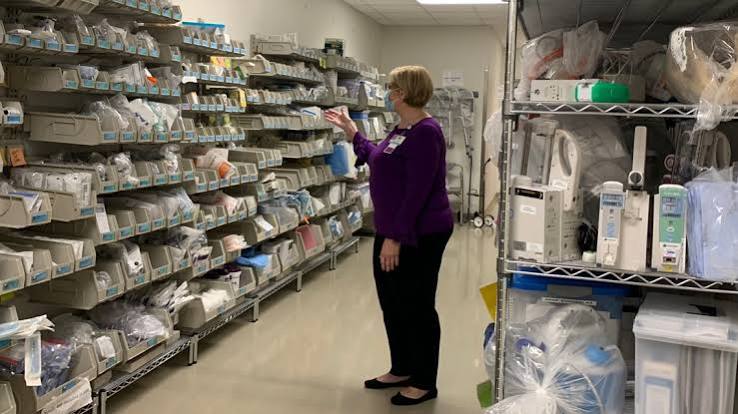
Clinical Sustainability Series: Article 2- Reducing supply costs and waste
Fights about orthopedic cement show the way forward
Years ago, I was in a heated orthopedic service line meeting about. . . cement. Apparently, this is not the commodity I thought it was! The data presented was remarkably specific: cost per cement by brand, the care quality attributes of each brand, physician preference, current case margin and how many additional cases the more expensive cement would bring to the physician and hospital. CXOs, nurses, physicians, supply chain and finance were all engaged. Normal service line stuff.
Imagine the same discussion happening about sustainability in surgery and ICU service lines. These are the most resource intensive services of the hospital. Waste and costs are massive in these areas- energy, labor, supplies purchased and not used, waste stream management, sterilized processing, equipment re-processing. These service lines are ripe for sustainability metrics and management. Today’s up-and-coming leaders are adding sustainability metrics to their management framework (see below).
Metrics to improve sustainable purchasing:
- Supply cost per ICU discharge and for top 20 DRGs
- Supply cost and item comparison per ICU pack
- Supply cost per OR case and for top 20 procedures
- Percent of outpatient surgery cases with full drapes
- Waste stream pounds and cost per ICU discharge and surgical case
- Number of times per year surgical preference cards are reviewed and reduced
- Number of times per year ICU patient kits reviewed and reduced
- Sustainability attributes of each product used in top 20 OR cases
- Sustainability attributes of each product used in top 20 ICU DRG
- Number of your top 50 vendors by service line that have a sustainability plan
- Reusable gown use
- Laundry costs
- PPE costs and volume per product and total for the ICU and OR
Focus efforts on your top 50 vendors and products, then add:
Labor costs are 50-60% of a hospital’s total operating expense. Supplies are next at 15-20%. The 3 largest US supply chain group purchasing organizations (GPOs) collect data on the sustainability strategy of each vendor. One GPO, Vizient, even has 20+ environmental attributes for their top 500 products. I recently spoke with the leader of an international supply chain organization who said there are over 2 million hospital supplies (SKUs) in the world, but most hospitals use the same 1000-2000 products. Even more than the 80/20 rule, it’s the 99.999/0.001 rule!
Reducing supply chain costs with sustainability: lessons learned:
During a GreenICU audit, we asked the nursing leader if she saw an opportunity for savings, sustainability and reducing waste. Her quote echoes across hospitals everywhere, “The amount of stuff we throw away after a patient is discharged is gross!” I asked if that was for isolation patients, she said it was for every patient. The hospital started adding supplies during COVID and had not reviewed the patient trays since due to staff shortages and leadership turnover. When I asked the supply chain leader about this, he was proud of the hospital’s vendor rebates, but had not looked at detailed supplies in a while. As you know, vendor rebates are funded by the incremental profit margins of buying MORE product. That model is outdated and based on assumptions before One Big Beautiful Bill’s $1T healthcare cuts.
- Don’t assume supply chain’s got this. In each of our audits, supply chain either had recent turnover or was busy managing vendors and reports. In 3 of the hospitals that used Vizient, none of the supply chain leaders knew product sustainability data was available. Follow-ups weeks later found the action item still on their to do list.
- Get quantitative. The data exists or can be easily obtained. It does not require an additional FTE or a lot of work by supply chain leaders. A sample data set is above. According to a recent Vizient analysis, published by Becker’s Supply Chain, med-surg supply costs will increase 3% in 2027.
- Audit by surgical case and DRG. Data about revenue, margin and cost per case are available. Use it as guide to review every item that goes into and out of an OR and ICU room. Look at EMR order sets, preference cards and patient trays. See where the recycle and waste bins are placed in the OR and patient rooms. Is the waste in each stream true or is everything thrown in expensive regulated medical waste red bags? How many pounds of waste bags per case? Talk to the surgical assistants about physician preference- there are lots of “I have always done it that way” waste. Look at the reusable sterilized equipment brought into the OR vs. what is removed unused. What equipment can be reprocessed? Which cases are your vendors whispering to your physicians to use the more expensive, new “single use medical device because its higher quality” rather than the reprocessed device that is a fraction of the cost. How much blue wrap and PPE are used per case and discharge?
- Nurses know! Nurses are amazing and they see it all. They want to tell you what they see to reduce costs, waste and protect patient quality. Asking them will save money and improve employee satisfaction scores. Another blunt email about reducing costs will land flat, but engaging on sustainability and quality will create organic, repeatable, scalable cost cutting and pollution reduction across the hospital!
- Physician champions will emerge. Maybe not your older docs at their volume peak, but residents and physicians under 45 are in tune with sustainability. When they see the hospital working on sustainability, they will come to the surface with data, journal articles and ideas. You’ll see positive comments in your physician satisfaction scores, too.
Bottom line
~20% of a hospital’s waste and pollution comes from facilities, the other 80% is on the floors (and in the endowment portfolio, guess which industries?). The detailed work to reduce this waste, cost and pollution is data rich and available. The process for finding this waste is like other quality initiatives from Deming and related quality management practices. Sustainability and quality are mutually beneficial and reduce costs. But don’t just take it from me, go ask a nurse!
SION60’s Purpose: We believe all health organizations can increase profit by reducing energy, waste & pollution with our low-cost platform and projects.